
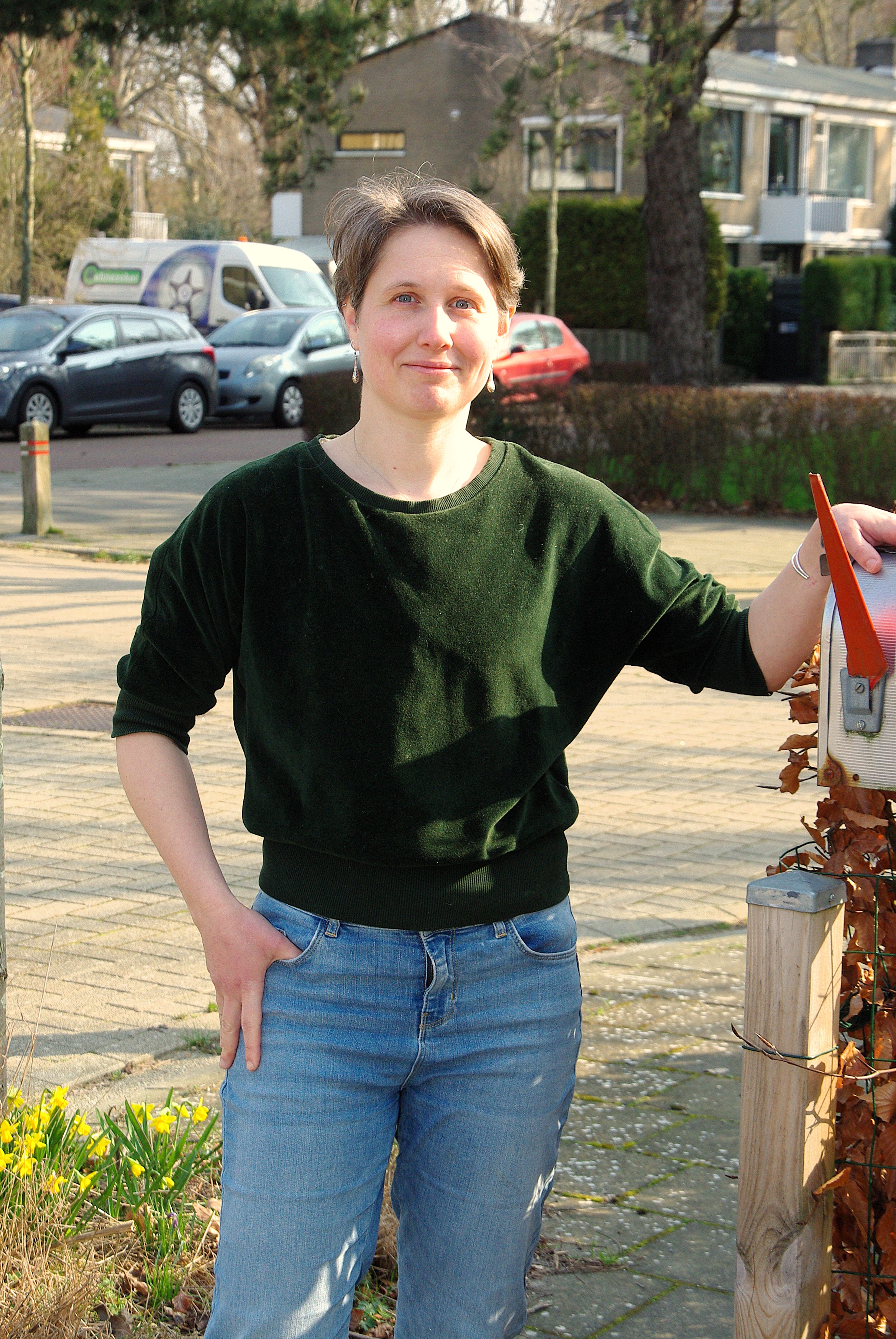
Joanne Chauveau: “Of course! You should make use of your right to vote.”
Of the 26,000 people living in Oegstgeest, around 4,800 were born abroad. About 2,100 of them have their ‘hometown’ elsewhere in Europe. Many of these Oegstgeest residents are allowed to vote in the upcoming municipal elections, just like their Dutch neighbours. Not all of them are fully aware of this, and for many the arrival of their poll card therefore comes as a surprise.
Unlike elections to the Dutch ‘Tweede Kamer’, where only Dutch citizens are allowed to vote, EU citizens who live in Oegstgeest may also vote in municipal elections. However, they must have been registered with the municipality by 2 February 2026. Non-Dutch residents from outside the EU must have lived legally in the Netherlands for at least five years and meet certain conditions before they are also allowed to vote in local elections.
This means that a large group of Oegstgeest residents will be choosing between the six political parties taking part in the municipal elections in Oegstgeest.
One of them is Joanne Chauveau (36), who happily lives in the Bloemenbuurt with her British husband and their two young daughters.
“I was surprised when the ‘stempas’ (poll card) arrived in the post,” she says cheerfully while taking her daughter onto her lap. “We’ve been living in the Netherlands for eight years now. First in Leiden, and recently we moved to Oegstgeest.” Until quite recently she did not realise that, as a French citizen, she would be able to vote for the local municipal council, and therefore for Dutch political parties. “This will be the first time I vote in the municipal elections.”
A pleasant neighbourhood
Joanne grew up in Houilles, a town in the suburbs of Paris. She later studied Science Communication in Strasbourg and Lyon. It was there that she met her English husband, who was working as an astrophysicist. “When he moved to the Netherlands, I followed him.”
She found a job in communications at TU Delft, and together they had two wonderful daughters.
Last year the family moved from Leiden to Oegstgeest. “We were looking in the Leiden area and ended up in this green neighbourhood. We knew that Oegstgeest had a reputation for being a pleasant municipality, and that really is true. It’s a very family-friendly village. Children are welcome everywhere. The schools and the shops are close by, and you see lots of people here with smiles on their faces, there’s a really nice vibe.”
The family enjoys the neighbourhood they live in. “The neighbours are very friendly, and you don’t have to get on your bike or into the car to find a nice place to go for a walk.”
Their eldest daughter is now in ‘groep 1’ at the local Montessorischool. “It’s a really lovely school, with many other children who grow up speaking two or even three languages. Our plan is to stay in Oegstgeest and raise our children here. In that sense, they will become Dutch.”
Interest in politics
Joanne did not grow up in a family where politics played a major role. “When I lived in France, I did not always vote.” Later, however, she decided that she would go to the polls whenever she received a voting invitation. “I realised that, as a woman, it is important to vote. Women fought hard for the right to vote. Out of respect for them alone, I think you should go to the polling station.”
Since becoming a mother, she has become much more interested in politics. “The future of the place where you live, but also the wider geopolitical situation, has become much more important since my daughters were born.” She laughs. “Sometimes I hardly recognise myself anymore. In the past I would always switch channels when political talkshows came on. Now I want to understand what is happening.”
Local
For internationals or ‘expats’ living in Oegstgeest, information about the local elections is not always easy to find. The letter included with the ‘stempas’ (poll card) mainly contains practical information about the voting process itself: what voters need to bring and where the polling stations are located.
“It says that six parties are taking part, and I see their posters on the election boards, but that doesn’t really tell me much about what they stand for,” Joanne says.
As a result, she has not yet looked in detail at the differences between the parties. “The municipality is already doing very well, because it’s green here and it’s a pleasant place to live. For my children, I hope Oegstgeest remains a nice and safe place to grow up. And I also hope the library will continue to play a central role in the village. It’s been very helpful for me, especially the ‘Taalcafé, where I improve my Dutch every week.”
English
“It’s good to know that there is an online voting guide, oegstgeest.kieskompas.nl, and that it is available in English. That will help me explore which party I want to vote for.”
She looks at the form to see who the mayoral candidates are, but cannot find any information. “Oh, the mayor here is not elected by the residents? I didn’t know that. Interesting. In France, the mayor is actually the person who determines the direction of the municipality.”
‘Go and vote!’
Joanne Chauveau encourages other internationals to consult the online voting guide oegstgeest.kieskompas.nl and make their voices heard on 18 March. “That way we can help ensure that this village remains a wonderful place to live.”